

Watermelon Grex
Watermelon Grex
Couldn't load pickup availability
Citrullus lanatus
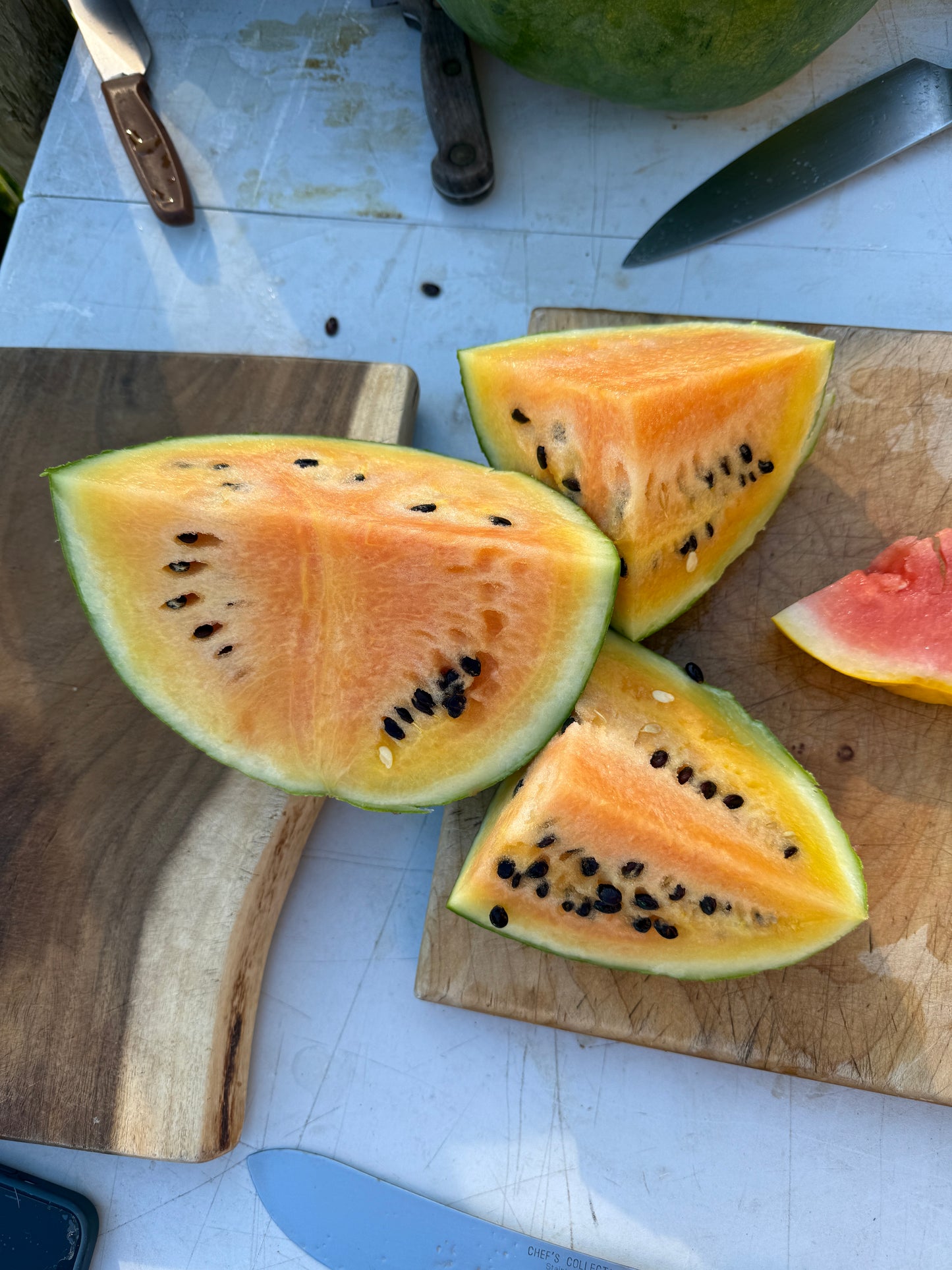
These seeds are the first generation of a large scale crowd breeding project. What is crowd breeding you ask? Folks sometimes use words like Grex, Landrace, or Diverse Population to mean a genetically diverse mix of the same type of plant was grown together, cross pollinated, and the seeds as a result of this crossing will produce highly diverse fruits, flowers, roots, or leaves. It is a fun and exiting way to encourage biodiversity as the plants rearrange their genetics and produce many different combinations of sizes, colors, shapes, and flavors. Now not all of the seeds in this mix will produce perfect watermelons. You will have the opportunity to select which plants are healthy and produce delicious fruits for you in your garden and your microclimate. If you continue to save seeds from the plants and fruits you like best, over many years you will begin to create a watermelon variety just for to you and your community!
This project started with two diverse mixes from friends in the Going to Seed community. Thank you Kay and Evalisa for helping get this project started with tons of diversity! I added multiple stable watermelon varieties such as Small Shining Light, Crimson Sweet, Petite Yellow, Moon and Stars, and Sugar Baby, to the mix. Over 300 plants were grown together and cross pollinated. The seeds I offer are saved from this first generation of plants to grow again typically resulting in a a wide variety of shapes, colors, and flavors.
I hope you enjoy the start of a breeding project in your own soil!
Growing Watermelons
I started the seeds indoors in Mid May and transplanted out into the field in Mid June. Watermelon need steady watering to get them going and as much heat as you can give them. The plants can be finicky so I'd encourage you to plant as many as you can to give you as many options as possible for saving fruits and seeds. Plant about a foot or more apart. Mulch well with straw to retain soil moisture and health.
The trickiest part about watermelons for me is knowing when they were ripe. They don't continue to ripen much after harvest so getting the timing down is helpful. I looked at the first tendril growing next to the stem on the fruit connected to the vine. When that tendril turns brown, they should be ripe. Look on the internet and you'll find many methods- including one to look at the watermelon's "butthole" on the bottom side and judge the tightness of the rind on the end opposite of the stem end. The tighter the butthole, the sweeter the fruit. As you can imagine, assessing the "clinch" of each watermelon butthole was very entertaining but a bit subjective.
Good luck and have fun with your watermelon!
~25 seeds per Packet